
ICON Health & Fitness machines are everywhere in the U.S.—especially under brands like NordicTrack and ProForm. And while the frames are usually durable, the parts that move, heat up, or carry electrical load are designed to wear over time.
The hard part isn’t “Can it be fixed?” It’s usually:
- Which part is actually failing?
- How do I match the right part to my exact model number and revision?
- Is it worth repairing or should I replace the machine?
The following guide provides those answers in a practical manner: the most frequently needed replacement parts to use with ICON-made treadmills, ellipticals, and exercise bikes–as well as a symptom-to-part map, a compatibility checklist, where to find these parts in the United States and a framework of repair vs. replacing.
Over latest post:medibio-health-and-fitness-tracker
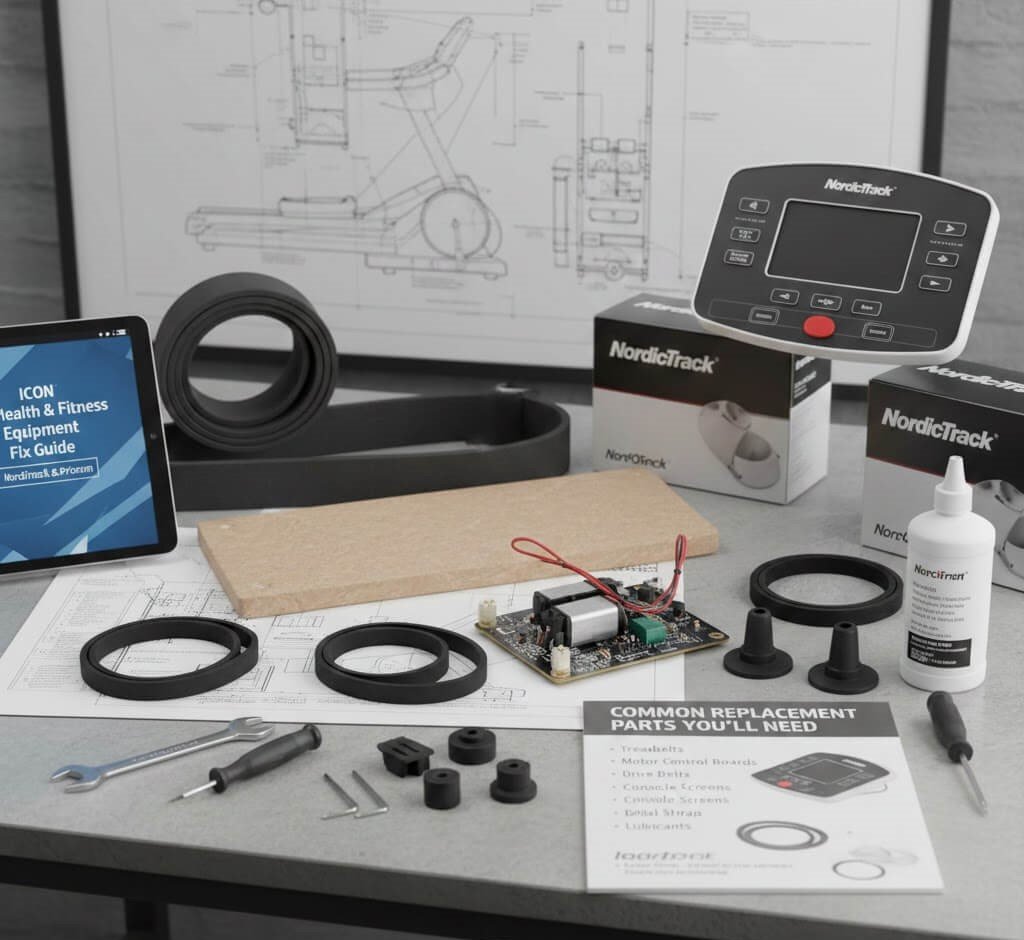
What counts as “ICON Health & Fitness equipment” in parts searches?
Most owners don’t search “ICON equipment parts.” They search the brand on the console or frame—typically:
- NordicTrack replacement parts
- ProForm replacement parts
Even when the logo differs, the repair workflow is similar: find the model number, identify the part number, confirm revision/version, then choose OEM vs aftermarket vs refurbished/repair service.
The Top 15 Most Common ICON Replacement Parts (Across Treadmills, Ellipticals & Bikes)
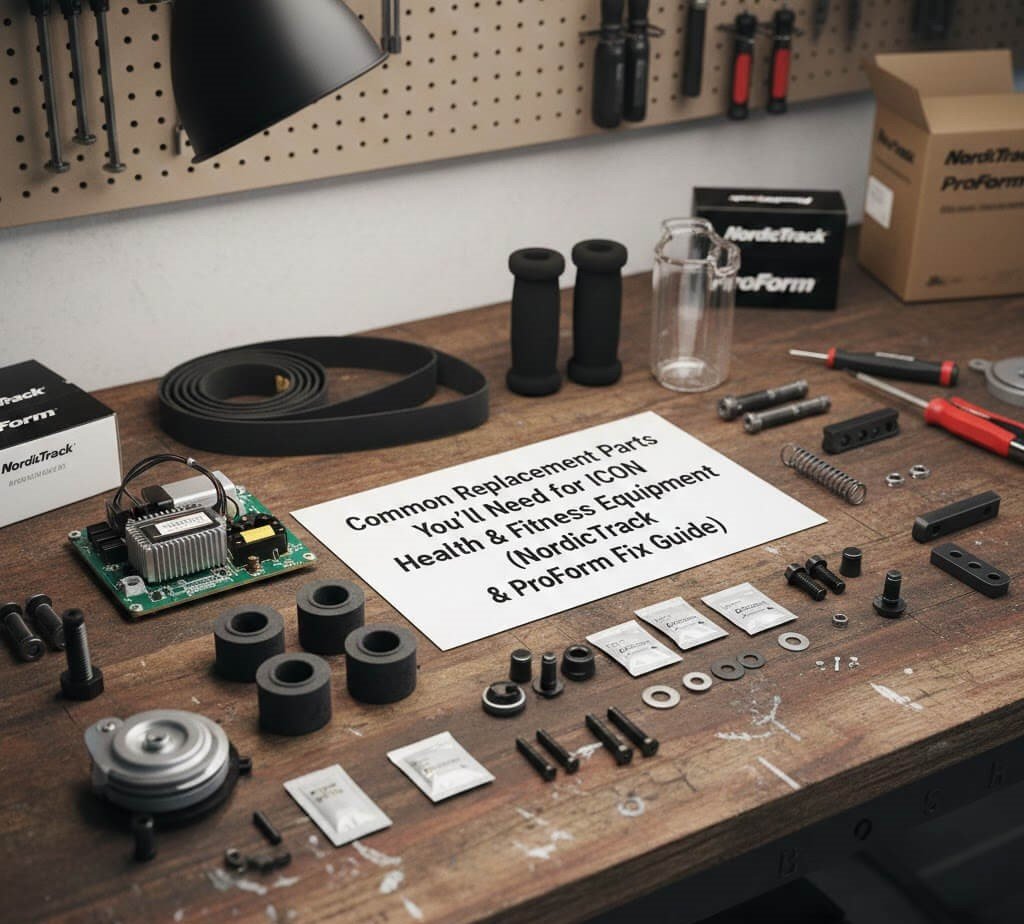
These are the parts that show up repeatedly in real-world repairs because they face friction, vibration, heat, or electrical stress.
- Treadmill walking belt
- Treadmill deck / walking board
- Front roller (and bearings)
- Rear roller (and bearings)
- Drive belt (motor belt)
- Drive motor
- Incline motor (treadmills)
- Motor control board / motor controller (lower control board)
- Console / upper display (screen, keypad, touch panel)
- Wiring harness / console cable
- Power cord
- Power switch and/or overload/reset switch
- Magnetic safety key (common loss/damage item)
- Resistance motor / braking system (ellipticals & bikes)
- Transformer / adaptor / power supply (varies by model)
If you’re trying to get running fast, start with the items most tied to symptoms: belt, deck, rollers, controller board, incline motor, safety key, wiring/power.
Quick Symptom → Likely Cause → Parts to Check (Snippet-Friendly)
Use this table when you’re not sure if it’s a belt issue, motor issue, or a control board issue.
| Symptom | Likely Root Cause | Parts to Check First |
|---|---|---|
| Belt slips or hesitates under load | Belt/deck friction or loose belt tension; worn roller bearings | Walking belt, deck, front roller, rear roller, lubrication |
| Belt slows down after a few minutes | Overheating from friction; controller reacting to load | Walking belt, deck, lubrication, motor control board |
| Belt won’t move but console works | Drive belt broken, motor issue, or controller failure | Drive belt, drive motor, motor control board |
| Incline stuck or won’t change | Incline motor failure or loose connection | Incline motor, wiring harness, controller connection |
| Won’t power up at all | Power input issue | Power cord, outlet/surge protector, power switch, overload/reset |
| Powers on then shuts off | Overload, failing board, motor overheating | Overload/reset, motor control board, drive motor, belt/deck friction |
| No display but power seems present | Console power or data connection issue | Console/display, wiring harness, transformer/power supply |
| Belt off-center / drifting | Misalignment or worn rollers | Roller alignment, front/rear roller, belt tracking adjustment |
| Burning smell | Friction or electrical overheating | Belt/deck, lubrication, motor, controller board |
This is the difference between a parts catalog and a true repair guide: symptoms are often caused by wear items first (belt/deck/rollers), not the expensive items.
Treadmill Parts That Fail Most (and why)
1) Walking Belt
The walking belt is the most common replacement because it’s a consumable surface under friction and body weight.
Typical failure signs:
- Slipping or hesitation when you step down
- Shiny/glazed surface (loss of grip)
- Frayed edges
- Increased noise or “drag”
Why it matters:
A worn belt increases resistance and heat, which can cascade into motor or motor controller board failure.
2) Deck / Walking Board
Many owners replace a belt and still have issues because the deck is worn too.
Typical signs:
- Belt keeps slipping even after proper tensioning
- Grinding feel
- Uneven wear marks on deck surface
Key concept:
Belt + deck work as a system. If friction stays high, you keep burning expensive components.
3) Rollers (Front & Rear) + Roller Bearings
Rollers keep the belt tracking smooth. Bearings wear out from load, dust, and time.
Symptoms:
- Squealing, chirping, grinding
- Belt drifting to one side
- Jerky movement that feels like “skipping”
4) Drive Belt (Motor Belt)
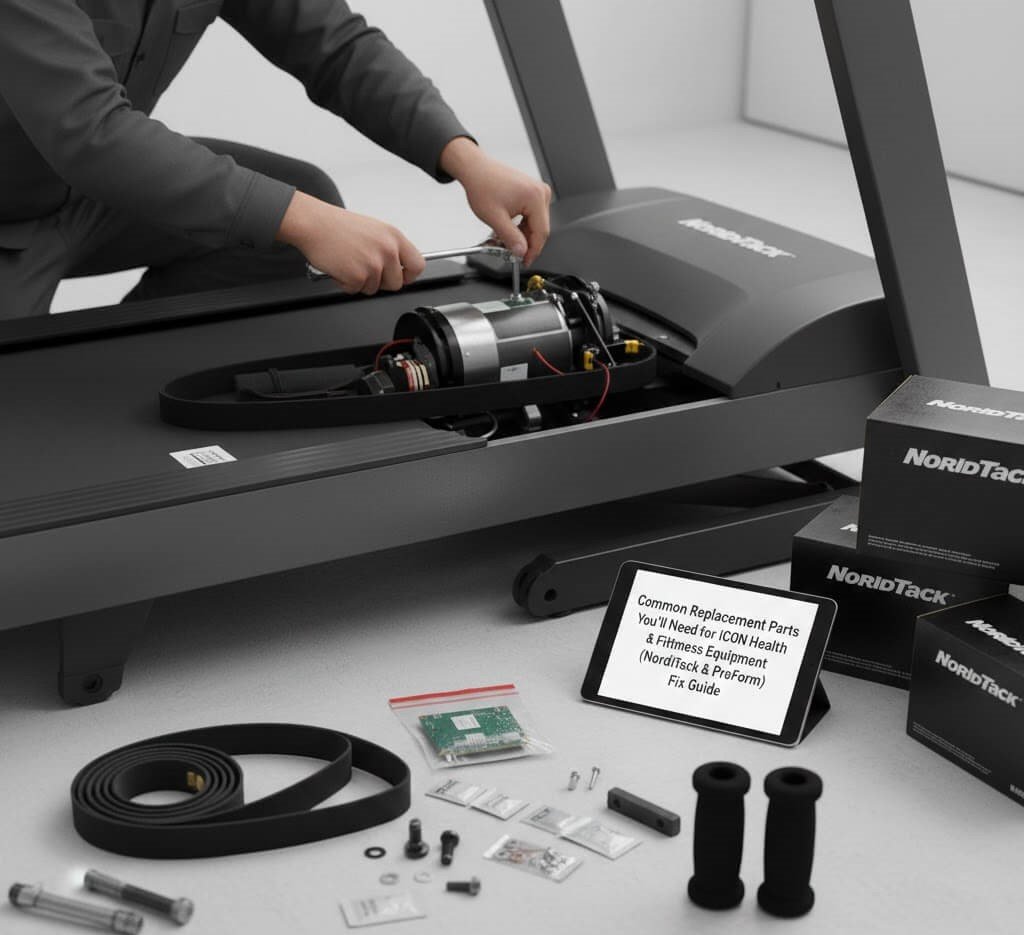
This connects the motor to the front roller.
Symptoms:
- Motor spins but belt doesn’t move
- Treadmill starts then stops abruptly
- Burning rubber smell (slipping belt)
5) Drive Motor
Motors can last a long time—unless they’re forced to work too hard from friction, dust buildup, or voltage instability.
Symptoms:
- Belt won’t move even though controller tries
- Overheating, smell, or repeated shutdowns
- Loud whining/rough running sounds
6) Incline Motor
Incline motors are common on treadmills and fail from repeated cycling, load strain, or poor connections.
Symptoms:
- Incline stuck at one height
- Clicking or grinding when incline is pressed
- Incline error behavior (varies by console)
7) Motor Control Board / Motor Controller (Lower Control Board)
This is one of the most expensive and commonly confused components.
What it does:
Regulates power to the motor based on speed commands and feedback.
When it’s likely the culprit:
- Console works but belt won’t move (after checking drive belt)
- Random speed surges
- Starts then stops with no mechanical cause
Important warning:
Don’t order a controller board just because “belt won’t move.” Check belt/deck friction first—otherwise a new board can fail prematurely.
Elliptical & Exercise Bike Parts That Commonly Need Replacement
While treadmills get the most attention, ICON ellipticals and bikes have predictable wear points too.
Resistance motor / Braking system
Common when resistance changes stop responding or feel inconsistent.
Symptoms:
- Resistance won’t increase/decrease
- Resistance changes randomly
- Console says it’s changing but feel doesn’t match
Crank bearings, pedal arms, and hardware
These experience constant cyclic load.
Symptoms:
- Clicking, wobble, or “play” in pedals
- Grinding noise during rotation
- Uneven motion
Transformer / adaptor / power supply (varies by model)
Especially on some bikes/ellipticals with external power.
Symptoms:
- Unit dead despite good outlet
- Power flickers when cable moves
Compatibility Checklist (Avoid the #1 Buyer Mistake)
The fastest way to waste money is buying a part that “looks right” but doesn’t match your machine’s exact specifications.
Before you order any ICON / NordicTrack / ProForm replacement parts, verify:
- Model number (from the frame label, not the console sticker alone)
- Serial number (helps with production batch differences)
- Part number from parts diagram/manual
- Revision/version (boards and consoles often have multiple revisions)
- Voltage & plug type (especially power supplies/transformers)
- Console type (basic LED vs touchscreen can change board/wiring compatibility)
If you’re working with a repair technician or local shop, give them:
- Model number + symptom + photos of the part label
That single step reduces wrong-order risk dramatically.
OEM vs Aftermarket vs Refurbished vs Board Repair Services
When sourcing in the U.S., you usually have four options:
OEM (Original Equipment Manufacturer)
Pros:
- Best compatibility confidence
- Often better fit/finish
Cons:
- Can be expensive
- Availability depends on model age
Aftermarket
Pros:
- Often cheaper
- Sometimes faster shipping
Cons:
- Compatibility and durability vary
- “Universal” claims can be misleading (especially belts)
Refurbished / Used
Pros:
- Good for discontinued boards/consoles
- Lower cost than new
Cons:
- Unknown prior wear
- Return policies vary
Board repair service (for motor controllers)
Pros:
- Can be cheaper than a new board
- Useful if new boards are out-of-stock
Cons:
- Turnaround time can vary
- Doesn’t fix root cause if friction/overload remains
Best practice: if replacing a controller board, also evaluate belt/deck friction and rollers so you don’t repeat the failure.
Over latest post:sunny-health-and-fitness-elliptical-trainer
Typical U.S. Cost Ranges (Parts Only)
Exact pricing changes by model and availability, so use ranges—then confirm at purchase time.
| Part | Common Range (USD) |
|---|---|
| Safety key | $10–$35 |
| Power cord / switch | $15–$60 |
| Drive belt | $20–$80 |
| Rollers (each) | $60–$200 |
| Walking belt | $120–$350 |
| Deck / walking board | $120–$400 |
| Incline motor | $150–$400 |
| Motor control board | $200–$600 |
| Drive motor | $300–$800 |
| Console / display | $200–$1,000+ |
Labor is a separate factor. For many households, DIY is reasonable for safety keys, lubrication, basic belt alignment, and some belt/roller swaps. Electronics, motors, and wiring diagnostics are often better handled by a fitness equipment repair technician.
Repair vs Replace: A Practical Decision Framework
Use this when you’re deciding if it’s worth fixing.
Repair is usually worth it when:
- The frame is solid and stable
- The repair is mostly wear items (belt/deck/rollers)
- Total estimated repair cost is comfortably below replacing the unit
- You can source parts in the U.S. quickly
Consider replacement when:
- Multiple expensive electronics have failed (console + controller + wiring)
- The motor is failing and parts are costly or discontinued
- The machine has structural issues (wobble, cracks, severe corrosion)
- You need minimal downtime and can’t wait on part availability
For B2B (gyms, apartment complexes, rehab centers): downtime cost matters. Stocking the most common spares can be a smart operational move
Over latest post:eastpointe-health-and-fitness
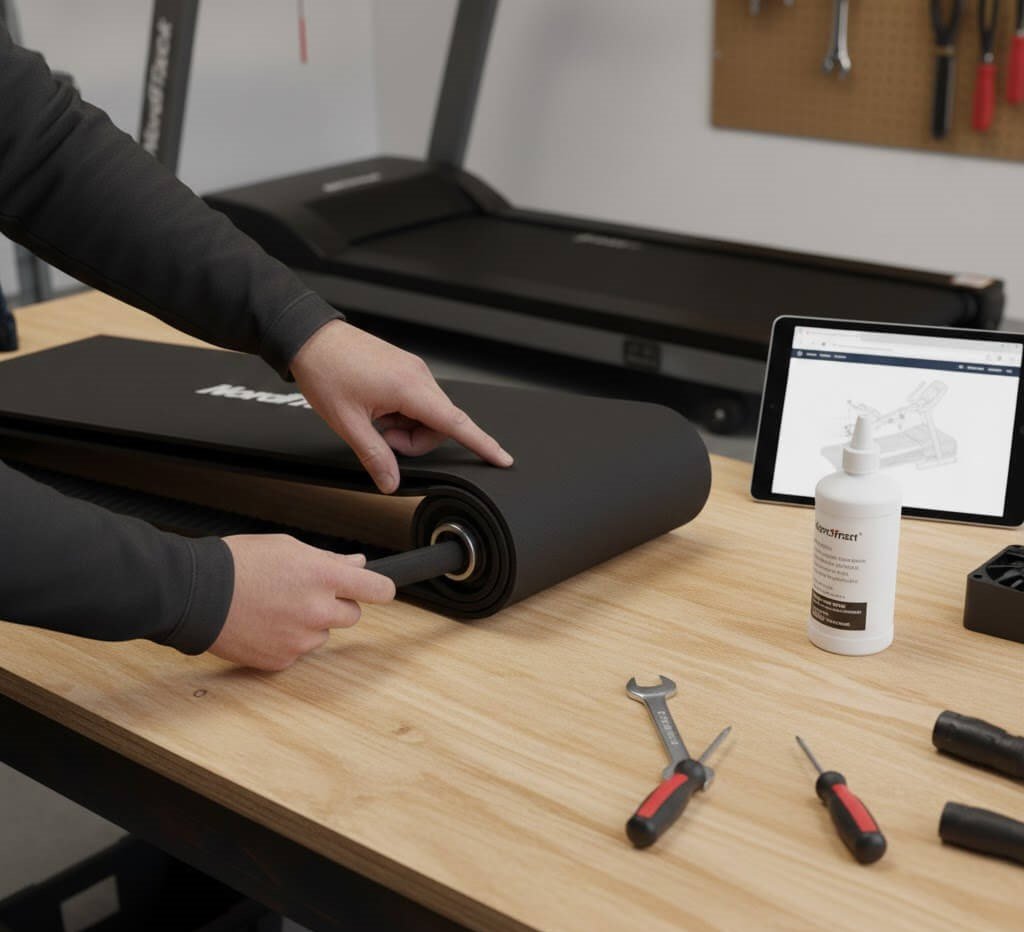
“Stock These Spares” List (B2B + Property Managers)
If you maintain multiple ICON units, keep a small spare inventory to reduce downtime:
For treadmills:
- 1–2 safety keys per model line
- Lubricant + hex/Allen tools
- Drive belts
- One common-size walking belt (if models match) or rapid sourcing plan
- One front or rear roller (high-impact if a unit is down)
- Known-compatible power cords and reset switches
For ellipticals/bikes:
- Pedals/straps
- Power adaptor(s) where applicable
- Common hardware kits
- Resistance motor/brake parts where failure rates are known
Local “Near Me” Service (USA) Without Turning This Into a Local Page
Even nationwide content should help users searching things like “NordicTrack repair near me” or “treadmill repair parts near me.”
When contacting local service providers in Chicago, Dallas, Los Angeles, New York, Miami—or anywhere in the U.S.—ask:
- Do you source parts, or do I supply them?
- Can you confirm part number compatibility from my model number?
- What’s your expected turnaround time for belt/roller replacement?
- Do you check deck friction and alignment after installation?
A good technician will talk about belt tension, belt alignment, lubrication, deck friction, and whether the failure could repeat.
Over latest post:form-and-fitness-health-club-grafton
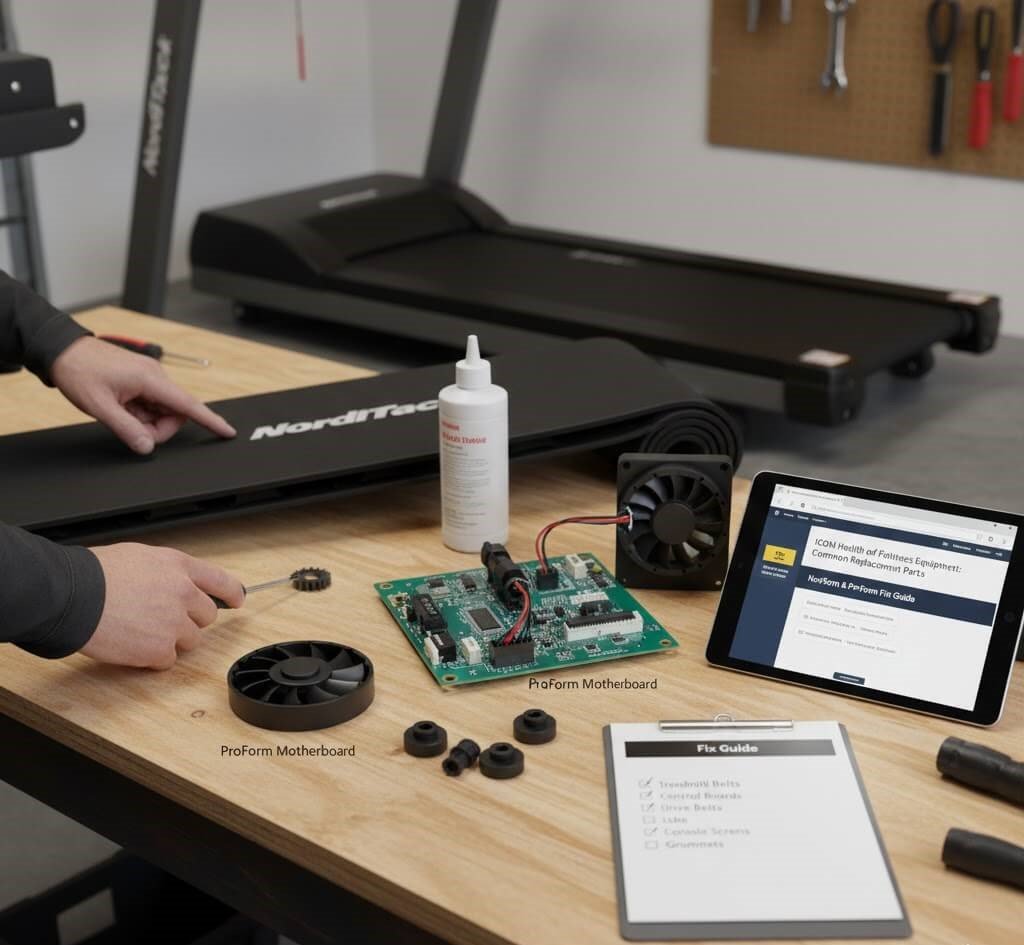
DIY vs Technician: What’s Safe to Do?
Usually DIY-friendly:
- Replace safety key
- Clean and lubricate deck (manufacturer-safe lubricant)
- Basic belt alignment and tensioning
- Replace some rollers if you’re comfortable and follow instructions
Usually technician-recommended:
- Motor control board replacement
- Drive motor replacement
- Wiring harness diagnosis
- Electrical testing with a multimeter (unless you’re experienced)
- Anything involving exposed electronics and capacitors
Always unplug before work, and avoid handling live boards.
7+ FAQs (human readable)
1) What are the most common replacement parts for NordicTrack and ProForm treadmills?
The most common are walking belts, decks, front/rear rollers (bearings), drive belts, incline motors, motor control boards, safety keys and wiring harnesses.
2) Are ICON, NordicTrack, and ProForm parts interchangeable?
Sometimes, but not reliably. Most of these components differ depending on the model and revision and even between similar machines. Part numbers should always be accompanied with the exact model.
3) My treadmill console works but the belt won’t move—what part is likely bad?
Begin with the drive belt, belt/deck friction and rollers. With them out, there is a high probability that it is the motor control board or drive motor.
4) Can I use a universal treadmill safety key?
There are universal keys that do perform, but other models have a particular shape of magnet or switch that must be used. In case the treadmill does not start, make sure you have the right safety key to your model.
5) What causes a treadmill belt to slow down under load?
The usual causes are a high deck friction (requires lubrication), a worn walking belt or deck, broken roller bearings or a motor controller board in response to overload.
6) What causes a treadmill to have no display even though it’s plugged in?
It may be a power supply/ transformer fault, loose console cable, broken wiring harness or a failed console/ display board. Check, also, the power switch and reset/ overload.
7) Is it worth repairing a 7–10 year old ICON treadmill?
Yes most of the time in case of repair that is predominantly wear parts (belt/deck/rollers). In case there is a failure of several electronics or the parts are no longer in production/costly, replacement can be more reasonable.
8) Should I replace the belt and deck together?
In case of intense wear of the belt and the surface of the deck is worn or rough in texture, the replacement of both usually prevents recurrence of failures as well as minimises the stress that the motor and controller experience.
Conclusion
Most ICON Health & Fitness equipment repairs come down to a predictable shortlist: belts, decks, rollers, drive belts, motors, incline motors, motor control boards, safety keys, wiring harnesses, and power components. The winning approach is to diagnose from symptoms, confirm compatibility using the model number and part number, and fix wear items early to avoid expensive secondary failures.
