

What Does PR Mean in the Gym?
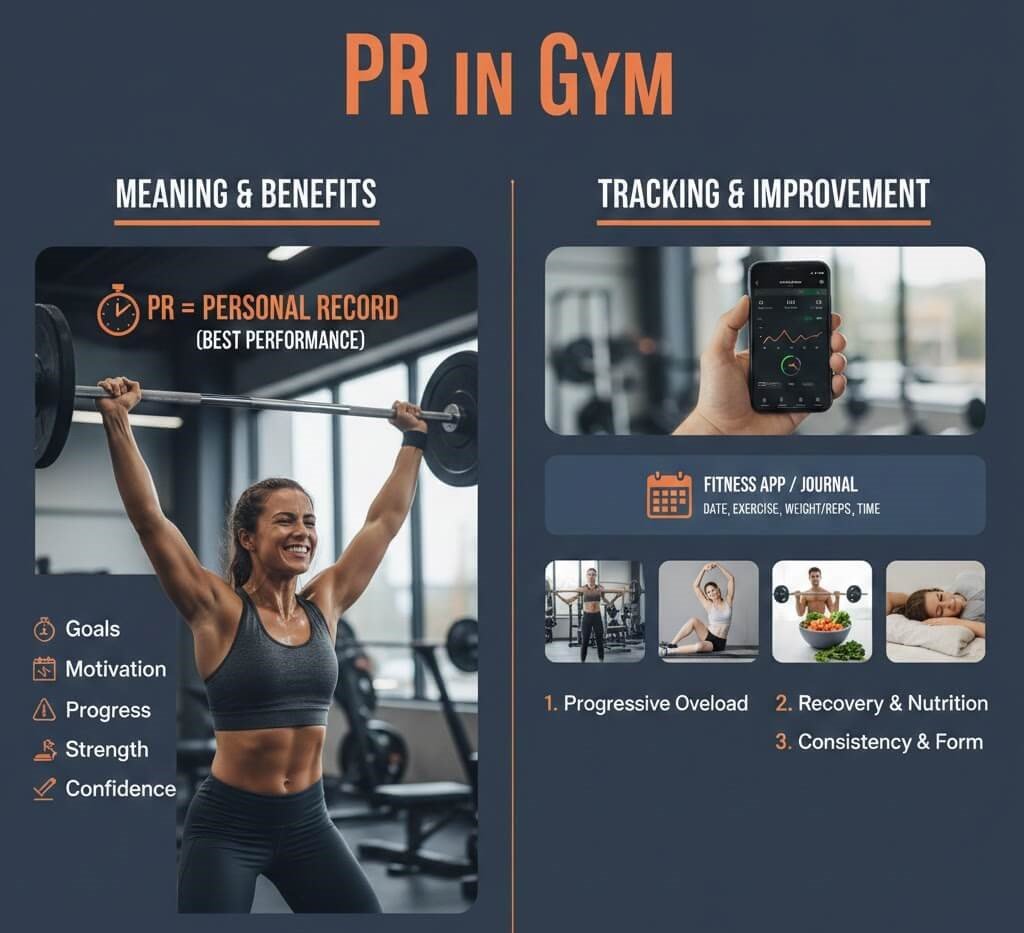
A PR is simply an abbreviation of Personal Record. It is the finest performance ever made in a particular exercise, distance, time, or workload. When individuals discuss pr in gym talks they tend to refer to the heaviest weight they lifted, the number of reps they did or the fastest time they ever ran.
It is not a PR about winning over other people. It is about competing with your former self. And that is why it is such a potent instrument of long-term motivation and quantifiable improvement.
Example PRs:
- Squat: 100 kg for 5 reps
- Bench press: 80 kg for 1 rep
- Deadlift: 140 kg for 3 reps
- Running: 5 km in 25 minutes
- Rowing: 500 meters in 1:40
Both of them are milestones in your workouts.
Over latest post:Leadgen for MMA Gym 17 Proven Strategies to Explode Membership Growth in 2026
Why PRs Matter for Progress
PRs give structure to your training. Instead of guessing if you’re improving, you have proof.
Key benefits:
- Clear progress tracking
- Strong motivation boost
- Better goal setting
- Increased training confidence
- Higher training consistency
Psychologically, hitting a new record releases dopamine. That “win” feeling keeps you coming back, even on tough days.
Types of PRs in Training
Not all PRs are about lifting heavier.
1. Strength PR
Heaviest weight for one or more reps.
2. Rep PR
More repetitions with the same weight.
3. Volume PR
More total sets × reps × weight.
4. Time PR
Faster completion (running, rowing, cycling).
5. Technique PR
Same weight with cleaner, safer form.
Each type reflects a different kind of progress and should be celebrated equally.
How to Set a Safe PR
Going after records without training results in plateaus or injuries.
Step-by-step:
- Warm up properly (10–15 minutes)
- Use progressive loading (small weight jumps)
- Maintain perfect form
- Rest adequately between attempts
- Use a spotter for heavy lifts
A PR should feel challenging, not reckless.
Over latest post:The Gym Milford Best Fitness Center in Milford MA for Strength, Cardio & Community

How to Track Your PRs
Tracking makes improvement visible.
Best methods:
- Training journal
- Mobile fitness apps
- Smartwatches
- Google Sheets
- Gym logboards
Record:
- Exercise name
- Weight
- Reps
- Sets
- Date
- How it felt (RPE)
This data helps you plan future cycles and avoid overtraining.
PRs for Beginners vs Advanced Lifters
Beginners
- Can hit PRs weekly
- Neural adaptation is fast
- Technique improves quickly
Advanced Lifters
- PRs may take months
- Progress is smaller but more meaningful
- Focus shifts to micro-loading and volume PRs
Both stages are normal and healthy.
Over latest post:Beams Gym Complete Guide to Balance Beam Training for Home & Gym

Common Mistakes When Chasing PRs
- Skipping warm-ups
- Ego lifting
- Poor sleep before heavy days
- Ignoring deload weeks
- Comparing with others instead of your own progress
Avoid these, and your PRs will come consistently.
Nutrition and Recovery for Better PRs
You can’t outlift poor recovery.
Nutrition essentials:
- Protein: 1.6–2.2g per kg bodyweight
- Carbs for training energy
- Healthy fats for hormones
- Hydration for performance
Recovery essentials:
- 7–9 hours sleep
- Active recovery days
- Mobility work
- Stress management
PRs are built during rest, not just in the gym.
Programming Strategies
Progressive Overload Explained
Progressive overload means gradually increasing:
- Weight
- Reps
- Sets
- Time under tension
- Training frequency
Small, consistent increases lead to long-term PRs without burnout.
Over latest post:Maine Warrior Gym Westbrook Maine Ultimate Guide, Classes, Prices & Reviews (2026)

Mental Strategies for Hitting a PR
- Visualization before the set
- Controlled breathing
- Positive self-talk
- Focus on execution, not fear
The mind often quits before the body does.
Injury Prevention While Going for a PR
- Never rush PR attempts
- Respect pain signals
- Strengthen stabilizer muscles
- Use proper footwear and belts when needed
- Schedule deload weeks every 6–8 weeks
Longevity beats short-term records.
FAQs
1. What is a PR in gym terms?
A PR is your best-ever performance in an exercise, time, or workload.
2. How often should I try to break a PR?
Beginners: every 1–2 weeks. Advanced: every 4–12 weeks.
3. Is a rep PR as valuable as a weight PR?
Yes. Both show progress and improved capacity.
4. Should I attempt a PR when tired?
No. Fatigue increases injury risk and reduces performance.
5. Can cardio workouts have PRs?
Absolutely. Time, distance, and pace are common cardio PRs.
6. What if I fail a PR attempt?
It’s normal. Rest, recover, adjust the load, and try again later.
Conclusion
Getting to know what PR in gym means will totally change your perception of progress. An individual record does not consist of a barbell number or a stopwatch time. It is evidence of uniformity, integrity and gradual progress. It could be your first squat PR, or you are an advanced lifter and you are breaking a deadlift record you have been chasing for a long time, every milestone is evidence that your training plan, recovery and mentality are all working together.
Monitoring your PRs, progressive overload, focusing on good form and good nutrition and rest will help you to be long term successful. You do not run around after random workouts but rather you train with a purpose. After all, PRs make the gym a quantifiable experience of progress, enabling you to feel more motivated and stay in a rut, as well as get stronger, fitter, and more confident in the long-run.
