

Mike Mentzer Workout Routine: 7 Brutal Heavy Duty Principles That Redefined Muscle Growth
Introduction
Because it defies popular exercise culture, the Mike mentzer training program is unique. Mentzer advocated for accuracy, recuperation, and body respect rather than continuous workouts and daily trips to the gym. If implemented properly, his Heavy Duty approach promised more muscle with less effort. These days, with overtraining and burnout on the rise, this idea seems applicable once again. Using current research, moral training guidelines, and practical modifications for natural lifters, this manual revises Mentzer’s methodology.
Over latest post:Berberine for Weight Loss: Unlocking its Potential for a Healthier You
Who Was Mike Mentzer?
Professional bodybuilder, philosopher, and Mr. Olympia contestant Mike Mentzer was renowned for his sharp mind and unwavering logic. He thought that rather than taking advantage of human limitations, training should respect them. Mentzer left behind more than simply muscle; he also left behind autonomy, informed consent regarding training intensity, and personal recuperation requirements. Dr. John Little, a fitness historian, said that “Mentzer forced bodybuilding to confront the cost of excess.”
Heavy Duty Training Philosophy
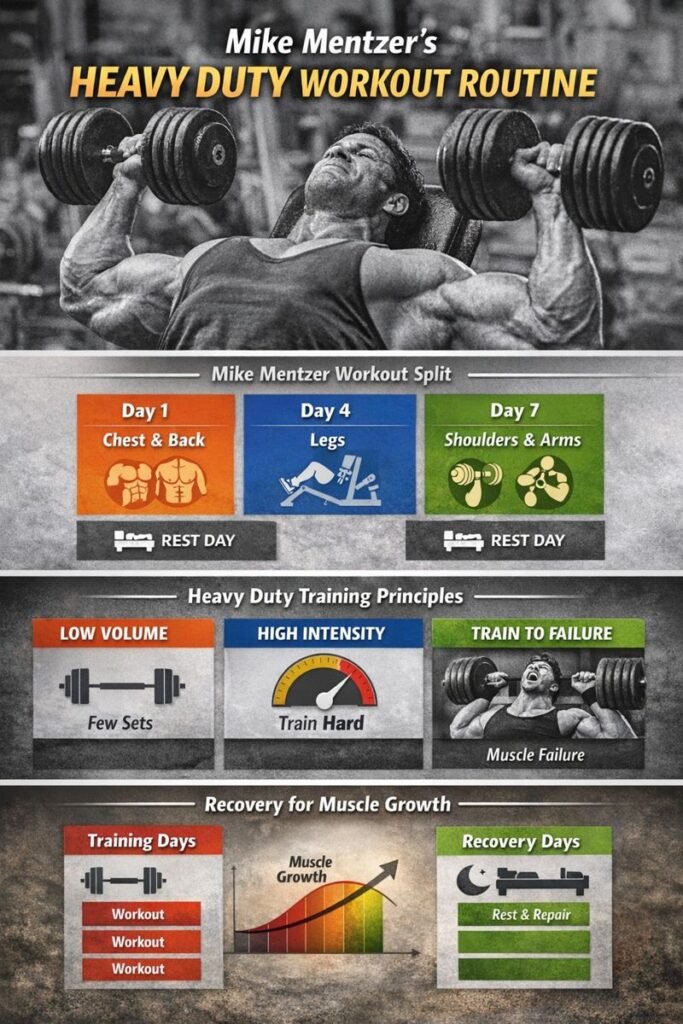
Maximum intensity, minimum volume is the foundation of heavy duty. Several middling sets are replaced by one all-out set to failure.
Fundamental Ideas
- To get actual muscle failure, train.
- Fewer sets and exercises
- More time off in between workouts
- There is no way to avoid progressive overload.
This honors the body’s natural ability to heal and adjust.
Over latest post:Push Day Workout: Build Chest, Shoulders & Triceps Safely
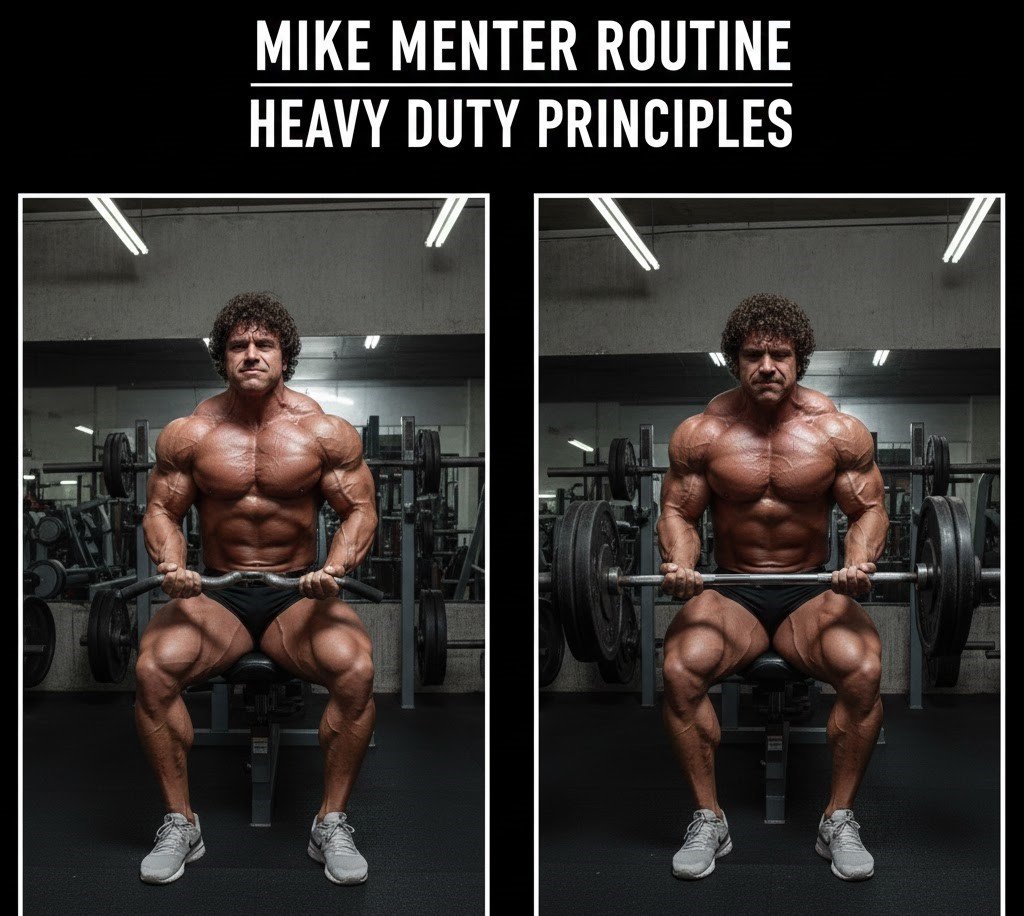
Science Behind Low-Volume HIT
When effort is equal, current research on hypertrophy demonstrates comparable muscle growth from low-volume, high-intensity exercise. Sports Medicine’s 2023 review affirmed that training near failure is a key factor in development. This is in line with heavy duty, which also lessens time demands and joint stress.
Original Mike Mentzer Workout Routine
Full-body or upper/lower splits with one to two sets each exercise were part of the traditional Mike Menzer workout regimen.
(Original) Example
- Chest: One set of incline presses
- Back: One set of deadlifts
- Legs: One set of squats
- 4–7 days of rest
Severe? Indeed. Successful? Frequently for experienced lifters.
Over latest post:Fly Workout With Dumbbells: Safe Chest Gains That Last

Sample Weekly Split (Modernized)
To suit natural lifters and beginners:
Day 1 – Chest & Back
- Incline Dumbbell Press – 1–2 sets
- Pull-Ups – 1–2 sets
Day 4 – Legs
- Leg Press – 1–2 sets
- Romanian Deadlift – 1–2 sets
Day 7 – Shoulders & Arms
- Overhead Press – 1–2 sets
- Barbell Curl – 1 set
Rest days are mandatory, not optional.
Exercise Execution & Intensity Techniques
Mentzer employed:
- Forced repetitions
- Negative representatives
- Pause for rest
Do not overuse. Spotters and experience are required for these methods. Priority one in training is safety and dignity.
Recovery, Rest, and Overtraining Prevention
Growth occurs during recovery. Heavy Duty values work-life balance, mental wellness, and sleep. Adults require 7 to 9 hours of sleep per night in order to heal their tissues, according to NHS UK guidelines. It is against basic training ethics to ignore recovery.
Over latest post:Trigger Finger Workout: 7 Powerful Exercises for Relief
Nutrition & Supplement Basics
Mentzer favored whole foods over fads.
- About 1.6–2.0 g/kg of protein
- Calories: A small excess
- Supplements: whey, magnesium, and creatine
No culture of coerced supplements. Making an informed decision is important.
Real Results: Case Examples
Increased strength and fewer injuries are common among natural lifters. One coach in the UK observed that customers were improving lifts while training 3× less, which is evidence that, when done properly, intensity may take the place of volume.
Common Mistakes to Avoid
- Training to failure every session
- Copying advanced routines too soon
- Ignoring joint pain
- Skipping deloads
Is This Routine Right for You?
Ideal for:
- Lifters that are intermediate to advanced
- Professionals with busy schedules
- Overly skilled athletes
Not suitable for:
- Total novices
- Clients in rehab without supervision
Safety, Ethics & Human Rights in Training
Training ought to empower rather than injure. This practice encourages:
- Preventing injuries
- Time efficiency through accessibility
- Respect for personal boundaries
Visual Guide (3 Suggested Images)
- Infographic: High Volume vs. Heavy Duty
- An example of proper form on an incline press
- Chart: Muscle development versus recovery days
FAQs
1. Is the mike mentzer workout routine safe?
Yes, when adapted and supervised properly.
2. Can beginners use Heavy Duty?
Modified versions only.
3. How often should I train?
2–3 sessions per week.
4. Does training to failure build more muscle?
Close-to-failure is effective; failure should be strategic.
5. Is this routine good for natural lifters?
Yes, with proper recovery.
6. How long before results show?
Strength gains often appear within 4–6 weeks.
In conclusion
The goal of the Mike Mentzer exercise regimen is to do what matters, not to do less. Heavy Duty becomes sustainable rather than severe when combined with ethics, science, and rehabilitation. Put in a lot of training. Get more rest. Be mindful of your body.
CTA:
Sign up for training materials based on research. Talk to a training partner about this article. Share your experience in a comment.
Author Bio
Haroon is a fitness content specialist and digital marketer focused on ethical, evidence-based health education. He blends SEO expertise with human-centered storytelling.
