
Chest and Back Workout – A Complete Guide to Upper-Body Power
One of the best methods to develop a powerful, well-balanced, and attractive upper body is to work out your back and chest. Combining exercises for these opposing muscle groups enhances posture, strength, symmetry, and performance in general. More significantly, it enables you to train more intensely without putting undue strain on your joints.
Real people who train at home or in actual gyms are the target audience for this guide. It blends workout research, real-world experience, and tried-and-true routines that lifters have been using for decades. Whether you want to lose weight, build muscle, or improve your posture, this article provides a comprehensive, simple-to-follow method.
Over latest post:Push Day Workout: Build Chest, Shoulders & Triceps Safely
Why Train Chest and Back Together
A traditional push-pull method is used when training the back and chest in the same session. One muscle group functions while the other is at rest. This improves your balance and maintains the health of your shoulders.
Logic of Push-Pull Training
- Pushing is a component of chest exercises.
- Exercises for the back include pulling
- When combined, they lessen overuse injuries.
- increases the effectiveness of training
Over latest post:Fly Workout With Dumbbells: Safe Chest Gains That Last
Advantages for Performance and Recovery
Switching between the back and chest enables:
- Increased intensity of training
- Reduced time spent sleeping
- Increased blood flow
- quicker recuperation in between sets
For this reason, a lot of expert strength trainers and bodybuilders depend on chest-back days.
Chest and Back Muscle Anatomy
You can train more effectively if you know what you are training.
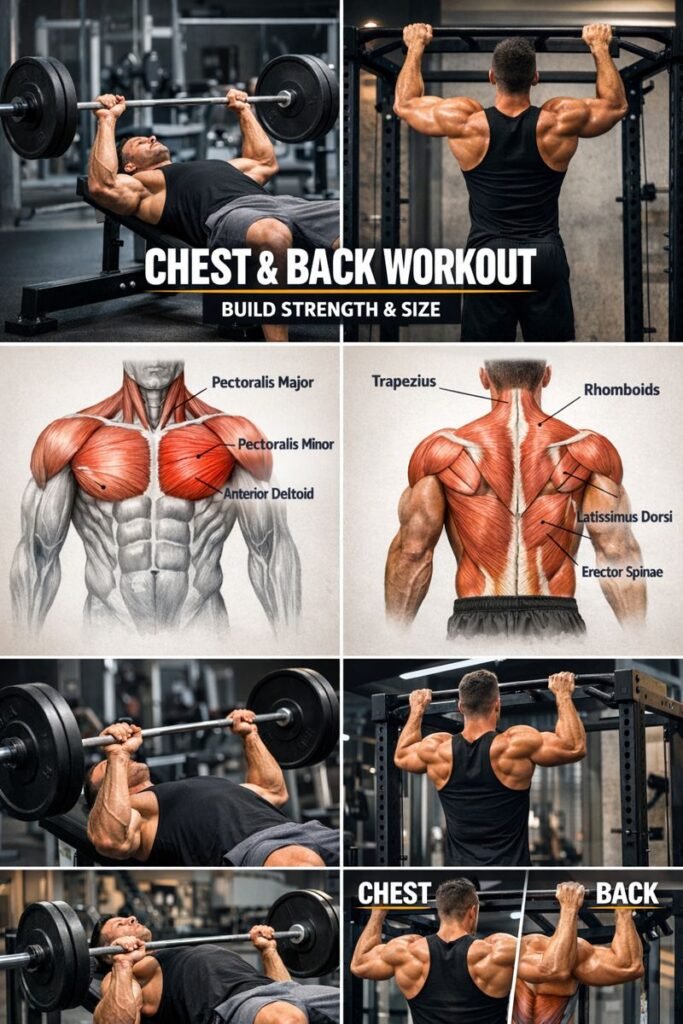
Chest Muscles Explained
- The primary chest muscle for size is the pectoralis major.
- Pectoralis Minor: stability of the shoulder
- Anterior Deltoids: support pressing motions
An Explanation of Back Muscles
- Latissimus Dorsi: V-shape and breadth
- Rhomboids: thickening of the upper back
- Trapezius: neck support and posture
- Erector Spinae: stability of the spine
A balanced growth of these muscles enhances both strength and beauty.
Over latest post:Trigger Finger Workout: 7 Powerful Exercises for Relief
Benefits of Chest and Back Workouts
Strength and Muscle Balance
By working both sides of the torso, you can avoid:
- Shoulder roundedness
- Unbalanced muscles
- Inadequate lifting techniques
Posture and Injury Prevention
Tight chest muscles are countered by a strong back. Particularly for those who spend a lot of time sitting down, this enhances shoulder health, respiration, and posture.
Other advantages consist of:
- Increased burning of calories
- Enhanced athletic performance
- Improved communication between the mind and muscles
Over latest post:Mike Mentzer Workout Routine: Heavy Duty Gains Explained
Best Chest Exercises for Growth
Compound Chest Movements
These workouts increase strength and mass:
- Bench Press with Barbell
- Dumbbell Press on an Incline
- Push-Ups (if feasible with weights)
The cornerstone of every chest and back exercise should be compound lifts.
Exercises for Isolation Chests
These improve control and shape:
- Flying Cables
- The Pec Deck Machine
- Flyes with dumbbells
Best Back Exercises for Width and Thickness
Vertical Pulling Exercises
- Pull-Ups
- Chin-Ups
- Pulldowns of the Lat
These exercises strengthen the grip and increase back breadth.
Exercises for Horizontal Pulling
- Rows of Barbell
- Cable Rows with Seats
- One-Arm Rows with Dumbbells
Horizontal pulls are crucial for posture and shoulder health, according to Barbell Medicine strength experts.
How to Program a Chest and Back Workout
Beginner Programming
- Exercise your back and chest once or twice a week.
- Three exercises for the chest
- Three back exercises
- Three sets of ten to twelve repetitions
- Pay attention to consistency and form.
Intermediate Programming
- Make use of supersets
- 4–5 workouts in pairs
- Moderate weights
- Take a 60–90 second break.
Advanced Superset Training
Typical pairings consist of:
- Pull-ups → Bench Press
- Barbell Rows → Incline Press
- Flying Cables ← Face Pulls
This technique increases muscle pump and intensity.
Sample Chest and Back Workout Plan (Gym)
Exercise Example
- 4×6 Barbell Bench Press
- Pull-Ups: 4×AMRAP
- 3×8 Inclined Dumbbell Press
- 3 x 10 seated cable row
- Three supersets: Cable Flye + Face Pull
- Duration of workout: 60 to 75 minutes.
Common Mistakes to Avoid
- Exercising the chest more than the back
- Using too much weight and bad form
- Ignoring warm-ups
- Ignoring days off
Faster progress and fewer injuries result from correcting these errors.
Nutrition and Recovery Tips
Exercise breaks muscle. It is rebuilt by nutrition.
Important points:
- Consumption of protein: 0.7–1 g/pound of body weight
- Get at least seven hours of sleep.
- Drink plenty of water.
Beneficial supplements:
- Whey protein
- Monohydrate of creatine
- Magnesium for healing
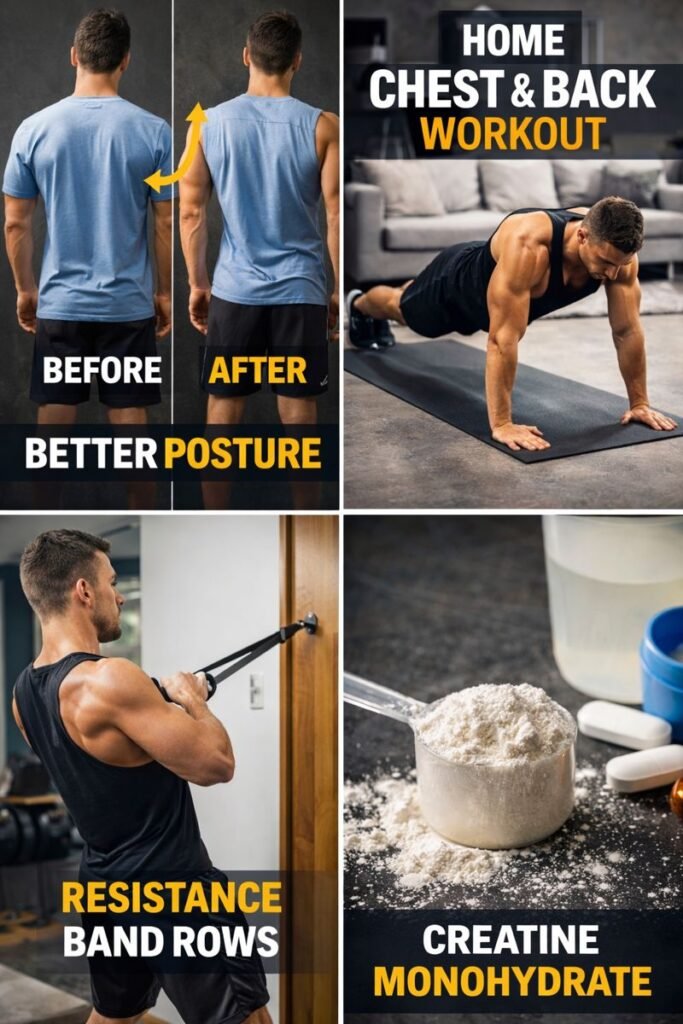
Home Chest and Back Workout (No Equipment)
If you work out at home:
- Push-Ups
- Rows of Resistance Bands
- Rows of Doors
- Holds that are isometric
Even without access to a gym, this keeps muscles working.
Frequently Asked Questions
Q1: Is a chest and back workout effective for muscle growth?
Yes. It promotes balance, strength, and hypertrophy.
Q2: How many exercises should I do?
Usually 5–7 total exercises work well.
Q3: Can beginners do supersets?
Yes, but start light and focus on control.
Q4: How long should rest periods be?
60–90 seconds for hypertrophy training.
Q5: Can women follow the same routine?
Absolutely. The structure stays the same.
Q6: Is training chest and back together safe?
Yes, when form and recovery are prioritized.
Conclusion
A well-planned exercise program for the chest and back develops strength, enhances posture, and produces a powerful upper body. It is effective, joint-friendly, and proven to work to train opposing muscle groups together. Focus on consistency, make small, steady progress, and stay true to the basics. There will be outcomes.
