How long does a gym pump last? To most, muscle pump may take between 30 minutes and 3 hours after exercise, depending on exercise intensity, hydration, nutrition intake, and blood flow. This is the pump that is experienced when the working muscles are filled with the rush of blood, oxygen, and nutrients that lead to short-term swells and tightness. The pump is largely a transient physiological action that apparently represents instantaneous expansion. However, it can be extended with appropriate training, nutrition, and rest and even be used as an indicator of permanent hypertrophy.
Over latest post:Anti Burst Gym Ball The Complete Guide for Safe, Effective Core & Full-Body Training

What Is a Muscle Pump?
Cellular swelling is also known as the muscle pump, which happens as blood plasma and fluids fill the inside of the muscle cells during resistance training. This creates:
- Temporary muscle enlargement
- Tight, full feeling
- Increased vascularity
- Enhanced mind-muscle connection
The physiological effects of nitric oxide release are the dilation of blood vessels to facilitate the intake of more blood. The water, lactate, and hydrogen ions are free to increase in order to pull in water into the muscle cells.
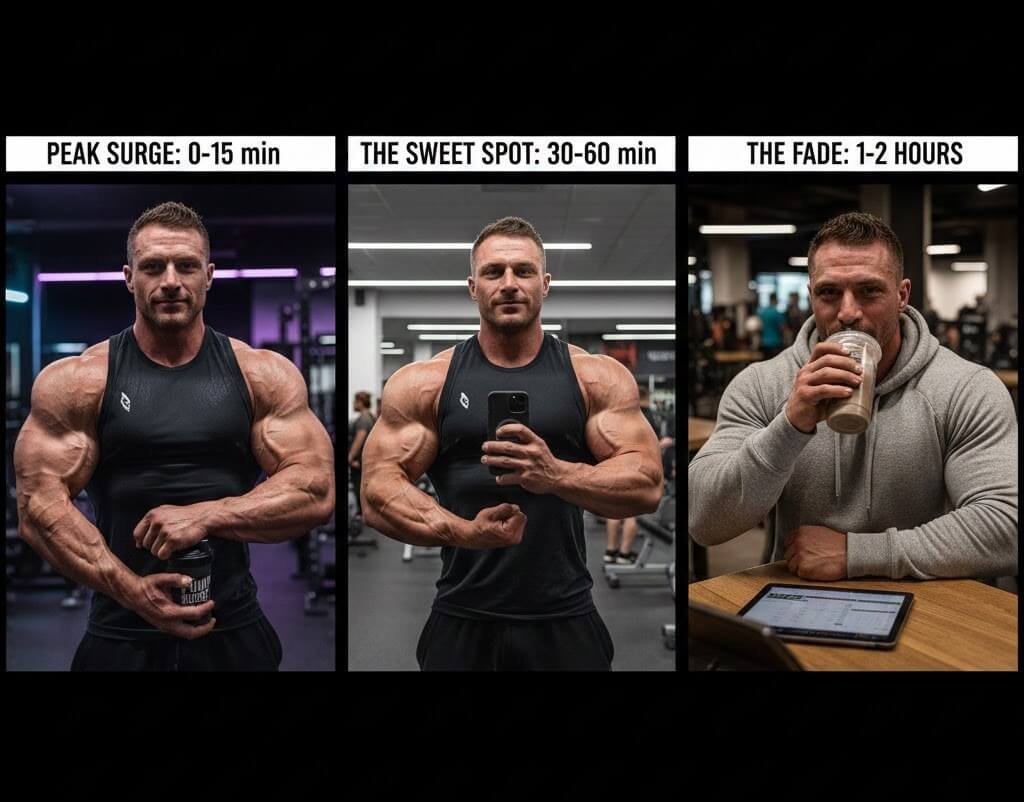
How Long Does a Gym Pump Last on Average?
For most trainees:
- Minimum: 20–30 minutes
- Average: 1–2 hours
- Maximum: Up to 4 hours (with optimal conditions)
Over latest post: GlobalFit Gyms Complete Guide to Corporate Fitness Access, Benefits & Membership Options
Beginners vs Advanced Lifters
| Level | Pump Duration |
|---|---|
| Beginners | 45–90 minutes |
| Intermediate | 1–2 hours |
| Advanced | 2–4 hours (with carbs & hydration) |
Advanced athletes often experience longer pumps due to higher capillarization and muscle glycogen storage.
The Science Behind the Pump
Research works in hypertrophy reveal that:
- It is as a result of mechanical tension that the growth of muscles is initiated
- Anabolic signaling is increased by metabolic stress (pump).
- Cell swellings augment protein synthesis routes (mTOR).
The pump increases:
- Sarcoplasmic volume
- Nutrient delivery
- Anabolic hormone transport
Temporary cellular swelling that is repeated may facilitate long-term muscle adaptation.
Factors That Affect Pump Duration
Hydration
Dried muscles are not able to retain intracellular fluid
Tip:
Consume 500-750 ml of water before training and drink it during training
Carbohydrates & Glycogen
High glycogen = stronger, longer pump.
Best sources:
- Oats
- Rice
- Bananas
- Potatoes
Workout Volume
High reps (10–20), short rest, and supersets enhance blood pooling.
Rest Intervals
- 30–60 seconds = maximum pump
- 2–3 minutes = strength focus, less pump
Does a Longer Pump Mean More Muscle Growth?
Not always. A pump indicates:
- Good blood flow
- High metabolic stress
- Effective muscle activation
But real growth depends on:
- Progressive overload
- Protein synthesis
- Recovery and sleep
Consider the pump to be a sign as opposed to an outcome.
How to Make Your Pump Last Longer
Training Techniques
- Drop sets
- Supersets
- Occlusion (BFR) training
- Slow eccentrics
Nutrition Strategies
Pre-workout:
- 40–60 g carbs
- 20–30 g protein
- Sodium for vasodilation
Post-workout:
- Fast carbs + whey protein
Supplements
Evidence-based:
- L-Citrulline
- Arginine
- Beta-Alanine
- Glycerol
- Nitrates (beetroot)
Latest post: Gym: The Complete Guide to Meaning, Types, Design Ideas & Buying Tips

Pump vs Real Muscle Size
| Pump | Real Growth |
|---|---|
| Temporary | Permanent |
| Fluid-based | Protein-based |
| Lasts hours | Lasts years |
| Visual effect | Structural change |
Common Myths About Muscle Pump
- Bigger pump = bigger gains (not always)
- No pump = bad workout (false)
- Pump burns fat (indirect only)
- Supplements are required (food works too)
Best Workouts for Maximum Pump
- German Volume Training
- Push-Pull supersets
- FST-7 method
- High-rep leg days
- Arm specialization days
When the Pump Fades: What Happens Next
As blood redistributes and metabolites clear:
- Muscle size returns to baseline
- Protein synthesis continues for 24–48 hours
- The recovery phase begins
This is when actual growth occurs.
Latest post: Gym Seat Belt Buckle: What It Is, How It Works, Benefits & Safety Guide
Frequently Asked Questions
1. How long does a gym pump last naturally?
Usually 30 minutes to 2 hours.
2. Can a pump last all day?
Rare, but possible with high carbs and hydration.
3. Is the pump a sign of muscle damage?
No, it’s metabolic stress, not fiber tearing.
4. Do women experience pumps too?
Yes, identical physiology.
5. Does creatine increase pump duration?
Yes, by increasing intracellular water.
6. Is chasing the pump bad?
No, if balanced with progressive overload.
Conclusion
A gym pump is more than just a temporary boost in muscle size; it’s a sign that your muscles are receiving increased blood flow and nutrients during training. While a typical pump can last anywhere from 30 minutes to a few hours, depending on workout intensity, hydration, nutrition, and experience level, its real value goes beyond appearance. It can enhance motivation, improve mind-muscle connection, and support long-term muscle growth when combined with proper training and recovery.
