

Introduction [Gym Class Parachute]
One of the most flexible and captivating equipment utilized in a physical education program across the entire world is a gym class parachute. Students laugh, move, cooperate and develop the necessary motor skills in the first several minutes of a lesson. This is a basic but effective device that can change the conventional PE classes into interactive learning activities to enhance fitness, collaboration, and self-confidence.
You will also find in this guide what a parachute is, how teachers can use it successfully, the advantages it has in the various age groups and the best activities that will help to bring the maximum out of the students. As a PE teacher, school administrator, coach or a parent, this article gives all the information you will need to know in an attempt to implement the parachute-based activities successfully.
Over latest post:The Gym Milford Best Fitness Center in Milford MA for Strength, Cardio & Community

What Is a Gym Class Parachute and Why Is It so Popular?
A gym class parachute is a large lightweight nylon or polyester canopy, having evenly spacing handles at its edges. Students use the handles to make waves, raise air, bounce balls and learn how to move in a group.
History of Playground Parachutes
Parachute play originated in military training simulations and early childhood education programs during the mid-20th century. Educators noticed that group fabric activities improved coordination and cooperation. Over time, playground versions were developed specifically for schools and recreation centers.
How Parachute Equipment Works
The parachute traps air when lifted, creating resistance and visual motion. This resistance provides light strength training while the visual cues improve timing and rhythm. Handles allow equal spacing so every participant remains involved.
Who Can Use It? (Age Groups & Skill Levels)
Parachute activities work for:
- Preschool learners developing motor skills
- Elementary students learning cooperation
- Middle school students building fitness
- Special education programs requiring inclusive tools
- Adult fitness/rehabilitation classes.
The movements are flexible, and thus all people can be safe enough to engage in them and be confident.
Over latest post:Beams Gym Complete Guide to Balance Beam Training for Home & Gym
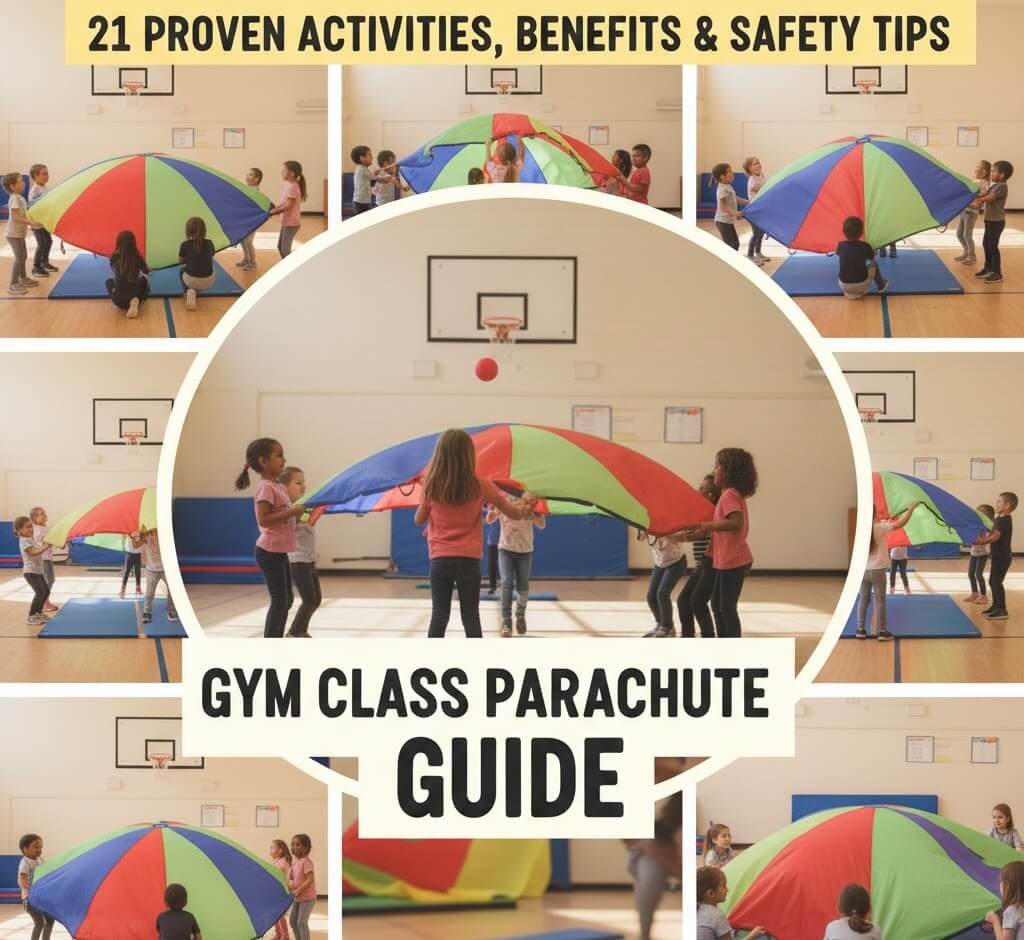
Advantages of Parachute Activities in Physical Education
The physical, cognitive and emotional benefits of the parachute-related activities can hardly be compared to those of any other PE tool.
Physical Fitness Benefits
Students improve:
- Cardiovascular endurance through continuous movement
- Upper-body strength from lifting and shaking motions
- Coordination and balance through timing-based games
- Flexibility with reaching and stretching patterns
Even short sessions increase heart rate without feeling like formal exercise.
Cognitive and Social Benefits
Parachute play strengthens:
- Listening skills and rule-following
- Problem-solving during cooperative challenges
- Communication and leadership.
- Emotional control and forbearance.
The students are taught to have faith in others and strive towards common objectives.
Inclusivity and Accessibility
Due to the possibility to adjust speed and intensity, students having physical limitations are also able to take part. Grip height, the range of movements, or pacing are often modified by the teachers in order to keep all people active.
Over latest post:Maine Warrior Gym Westbrook Maine Ultimate Guide, Classes, Prices & Reviews (2026)

21 Best Parachute Games and Activities for PE Classes
Below are practical, classroom-tested activities that scale for different age levels.
Warm-Up Games
- Popcorn Bounce – Toss soft balls on top and keep them bouncing.
- Color Call-Outs – Students run under when their color is named.
- Waves and Ripples – Create small and large waves together.
- Mushroom Lift – Lift high and step inside for teamwork practice.
- Slow Motion Stretch – Gentle raises for flexibility.
Skill-Building Games
- Switch Spots – Students change positions safely.
- Follow the Leader – Copy movement patterns.
- Target Toss – Aim balls into center target.
- Number Swap – Reaction training.
- Mirror Motion – Coordination challenge.
Team-Building Games
- Shark Attack – One student crawls under.
- Treasure Hunt – Find hidden objects.
- Group Countdown Lift – Synchronization exercise.
- Build-a-Dome – Structure control.
- Silent Signals – Non-verbal communication.
High-Energy Fitness Games
- Parachute Sprints – Short bursts of movement.
- Jump and Lift – Plyometric action.
- Ball Volcano – Rapid tossing.
- Wind Tunnel Runs – Speed drills.
- Timed Relay Circles – Endurance.
- Pulse Waves Challenge – Rhythm training.
These games maintain novelty while reinforcing physical literacy.
Over latest post:PR in Gym Meaning, Benefits, How to Track Personal Records & Improve Faster

How to Teach Parachute Activities Safely and Effectively
Safety Rules and Risk Management
- Maintain clear spacing between students.
- Use lightweight foam balls only.
- Teach lifting techniques before high lifts.
- No wrapping fabric around hands or neck.
- Stop immediately if someone loses grip.
Class Management Strategies
- Assign numbers or colors for quick organization.
- Demonstrate movements slowly first.
- Rotate leadership roles to boost engagement.
- Use countdowns for synchronized actions.
Equipment Care and Storage
- Dry completely before folding.
- Store in breathable bags.
- Inspect handles monthly.
- Clean with mild soap as needed.
Choosing the Right Parachute for Your School or Gym
Size and Material Options
- 12–15 ft – Small groups (6–10 students)
- 20–24 ft – Standard classes (15–25 students)
- 30 ft+ – Large assemblies
Nylon offers durability while polyester dries faster.
Budget Considerations
Prices are between the low-end, classroom models up to the commercial grade parachute with reinforced stitching. Investment on quality enhances safety and longevity.
Trusted Manufacturers
Find suppliers who have safety certification at school and warranty cover. The Wikipedia Playground Parachute page provides background information and history on which an authoritative source on parachute play may be found.
Frequently Asked Questions (FAQs)
1. What age is best for parachute activities?
Parachute activities suit ages 3 through adults, with adaptations based on skill level.
2. How many students can use one parachute safely?
Typically 10–25 depending on size and space.
3. Can parachute games improve teamwork?
Yes, nearly every activity requires coordination and communication.
4. Are parachute activities safe indoors?
Yes, when spacing rules and soft equipment are used.
5. How long should a parachute lesson last?
15–30 minutes fits most PE schedules.
6. Can special education students participate?
Absolutely, activities adapt easily for inclusive participation.
Conclusion
A gym class parachute creates meaningful movement experiences that balance fun, learning, and fitness. When teachers structure lessons thoughtfully, students develop physical confidence, social intelligence, and lifelong enjoyment of active play. Schools investing in quality equipment and safe instruction see measurable improvements in engagement and participation. With consistent practice and creative lesson design, parachute activities become a cornerstone of effective physical education.
