

Ironman Workout Schedule: 20-Week Training Plan to Crush Your Race
One of the hardest endurance challenges is preparing for an Ironman, which calls for a precise balance of swimming, cycling, running, strength training, and recuperation. This all-inclusive ironman training regimen is intended for competitors who want to finish their race quickly, minimise the chance of injury, and maximise performance.
Over latest post:Chest and Back Workout Blueprint: Build Strength, Size, and Upper-Body Balance

Understanding the Ironman Challenge
What is an Ironman Triathlon?
A 2.4-mile swim, a 112-mile bike ride, and a 26.2-mile marathon run make up an Ironman triathlon. It assesses mental toughness as well as physical stamina. To create a training program that prepares each muscle group and energy system, it is essential to comprehend the structure of the race.
Average Completion Times and Performance Benchmarks
Experience affects completion times; elite athletes typically finish in 8–9 hours, while novices may finish in 12–16 hours. Setting reasonable training objectives can be aided by comparing your present performance to these benchmarks.
Over latest post:Benefits of Sauna After Workout: 9 Science-Backed Reasons Athletes Swear By

Setting Your Goals Before Training
Assessing Current Fitness Level
Assess your swimming, cycling, and running skills before you begin. Think of swim technique assessments, lactate threshold runs, and VO2 max tests. This enables a customised level of training intensity.
Determining Your Race Goals
Establish explicit goals, such as finishing the event, meeting a time limit, or earning a title. Training volume, intensity, and nutrition planning are all influenced by goals.
Over latest post:6 Day Gym Workout Schedule – Complete Weekly Training Plan for Results
The Importance of Structured Training
Balancing Swim, Bike, and Run Workouts
Overuse injuries are avoided and overall performance is enhanced with a balanced routine. Make weaker disciplines a priority, and plan weekly brick workouts (bike-to-run).
Recovery and Injury Prevention
Incorporate foam rolling, stretching, rest days, and sleep techniques. The body adjusts and becomes stronger during recovery, which is crucial for Ironman performance.
Over latest post:Brachialis Workout: The Ultimate Guide to Bigger, Wider Arms
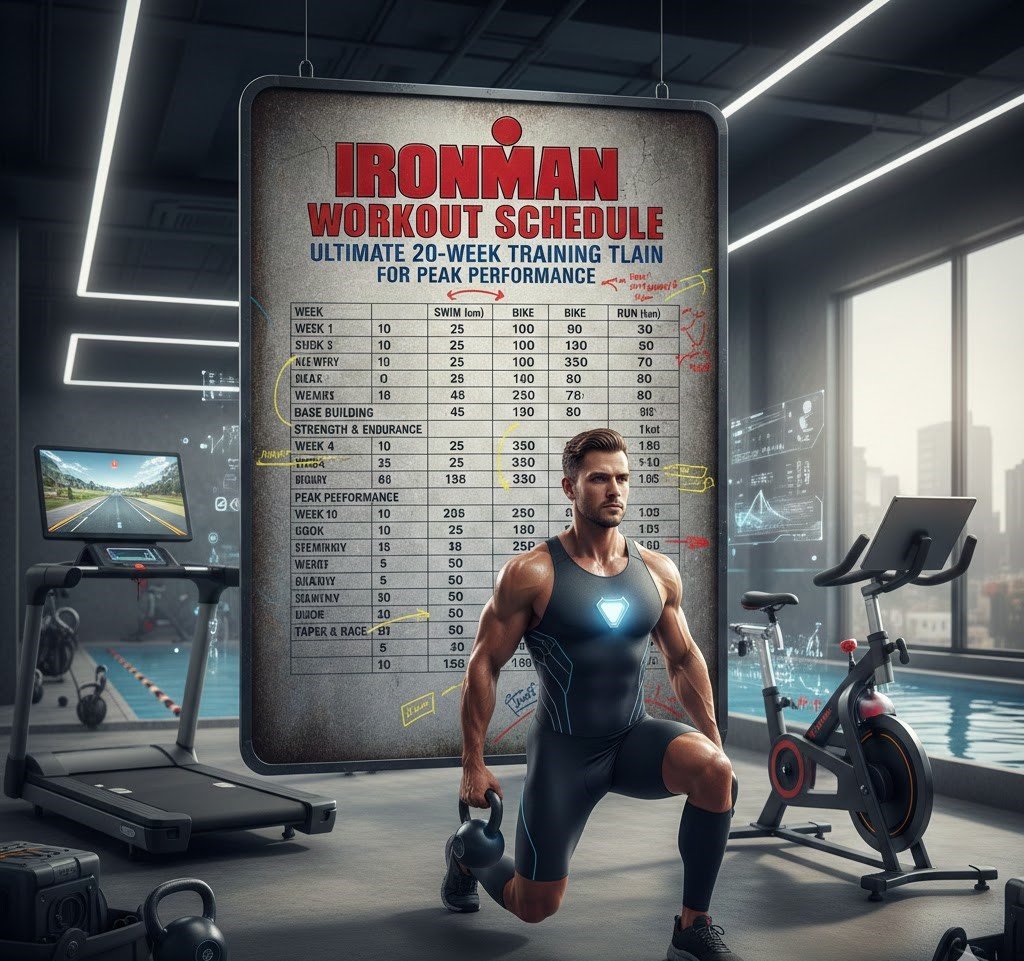
The 20-Week Ironman Workout Schedule Overview
Weekly Training Breakdown
Swim, cycle, run, strength, and recuperation exercises are combined every week. This is an example of a framework:
- Monday: Swim + Core Strength
- Tuesday: Bike Intervals + Short Run
- Wednesday: Long Swim + Yoga
- Thursday: Bike Endurance + Run Speed
- Friday: Rest or Active Recovery
- Saturday: Long Bike + Brick Run
- Sunday: Long Run + Strength
Sample Daily Schedule
- Morning: Swim (Technique Focus)
- Afternoon: Bike (Endurance)
- Evening: Short Run / Core
Swim Training Plan
Technique and Drills
Include exercises such as pull sets, fingertip drag, and catch-up. To save energy for subsequent portions, concentrate on increasing stroke efficiency.
Endurance and Speed Workouts
Swim for extended periods of time at a steady pace and then switch up the effort. For instance, ten 100-meter sprints with a 20-second break in between.
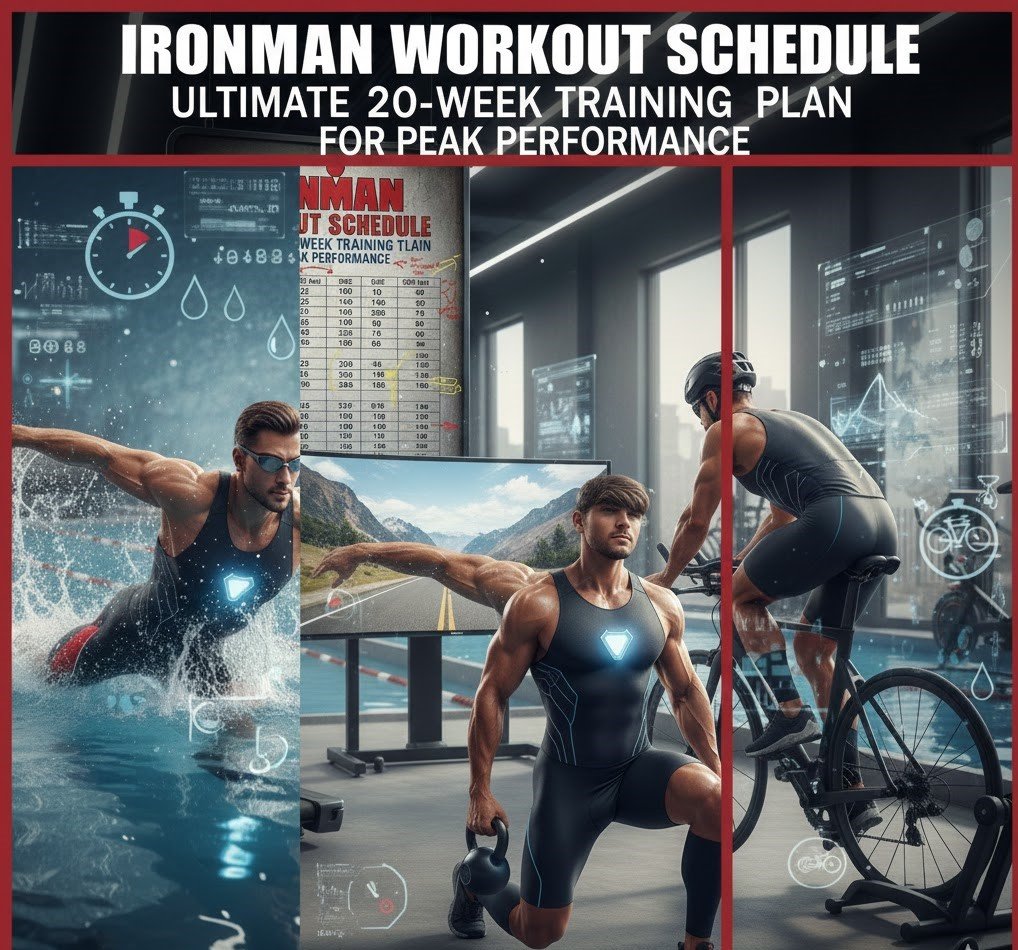
Bike Training Plan
Building Aerobic Base
Endurance is developed by long, low-intensity rides. Increase mileage by 10% every week.
Hill and Interval Training
To increase leg strength, power, and cardiovascular fitness, incorporate hill repeats and speed intervals.
Run Training Plan
Long Runs and Pace Management
Establish a comfortable pace for extended runs. To replicate race circumstances, include segments at a marathon speed.
Speed Work and Brick Workouts
Running economy is improved by short, quick intervals. To prepare the body for transitions on race day, combine bike-to-run sessions.
Strength and Cross-Training
Core Strength for Triathletes
Incorporate medicine ball work, Russian twists, and planks. Running posture, cycling efficiency, and swimming technique are all improved by core stability.
Resistance Training and Flexibility
Major muscular groups are strengthened by weight training twice a week. Stretching increases range of motion and lowers the chance of injury.
Nutrition and Hydration Strategy
Pre-Workout Fueling
Eat moderate protein and complex carbohydrates one to two hours before working out. Steer clear of meals that are high in fat or fibre as they may cause gastrointestinal distress.
Race-Day Nutrition Tips
Make use of electrolyte drinks, energy bars, and gels. To avoid stomach problems on race day, test while training.
Mental Preparation and Mindset
Visualization and Goal Setting
Imagine finishing the Ironman on a regular basis, paying attention to pace and transitions.
Overcoming Training Plateaus
To overcome performance plateaus, diversify your workouts, adjust the intensity, and make sure you recuperate properly.
Common Mistakes to Avoid
Overtraining and Burnout
Fatigue, injuries, and deteriorating performance are the results of excessive mileage without rest. Pay attention to your body and follow your routine.
Ignoring Recovery
Lack of sleep, foam rolling, and stretching all raise the chance of injury. Make rest a priority for long-term benefits.
Equipment and Gear Recommendations
Best Triathlon Bikes
Select a bike based on your budget and body type. Long rides are more efficient with aerodynamic triathlon bikes.
Essential Swim and Running Gear
Purchase a helmet, running shoes, goggles, and a high-quality wetsuit. To ensure comfort, test every piece of equipment before the race.
Tracking Progress and Adjusting the Plan
Using Training Apps and Logs
Apps that track performance, measure heart rate, and track recuperation include TrainingPeaks and Strava.
Periodic Fitness Assessments
For ongoing improvement, conduct monthly evaluations to modify training zones, mileage, and intensity.
FAQs About Ironman Workout Schedule
- Can beginners follow a 20-week Ironman plan?
Yes, but ensure prior endurance base and adjust volume to prevent injury. - How many hours per week should I train?
Typically 10-15 hours for intermediate athletes, with gradual increases. - Should I focus more on swimming or running?
Prioritize your weaker discipline, but maintain balanced training across all three sports. - Is brick training necessary?
Absolutely. It conditions your legs for cycling-to-running transitions. - How do I prevent injuries?
Include strength training, flexibility work, and proper recovery in your plan. - What if I miss a workout?
Don’t stress; adjust your weekly schedule and continue consistently.
Conclusion
This ironman exercise schedule is an organised, all-inclusive program created to assist competitors of all skill levels in winning one of the hardest endurance competitions. This 20-week program gives you the tools for optimal performance by fusing strength training, nutrition, and mental preparation with swim, cycle, and run training. To succeed on race day, maintain consistency, pay attention to your body, and enjoy the process.
