
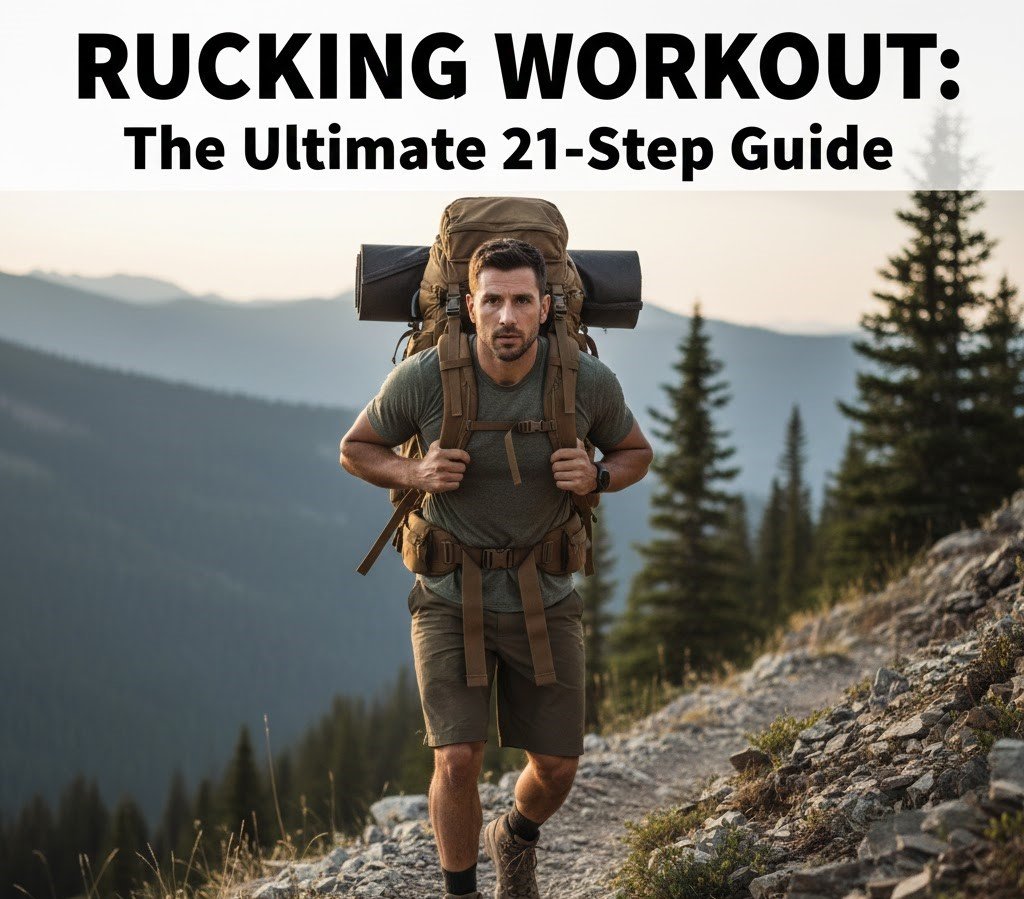
What Is a Rucking Workout?
A straightforward yet challenging type of heavy walking is a rucking workout. You walk for a predetermined amount of time or distance while carrying weight in a backpack, also known as a rucksack. That’s all. No fancy machinery. No intricate choreography. simply walking with resistance and purpose.
Despite its simplicity, rucking develops mental toughness, strengthens muscles, and tests the cardiovascular system. Many people use a rucking workout to increase fitness without straining their joints because it has less impact than running.
Most novices experience increased heart rates, stronger legs, and better posture awareness over the first few sessions. One of the things that makes rucking so addictive is the instant feedback.
Over latest post:Ironman Workout Schedule: Ultimate 20-Week Training Plan for Peak Performance

Why Rucking Is Exploding in Popularity
Rucking is no longer limited to military training grounds. It works, which is why hikers, busy workers, fitness enthusiasts, and senior citizens are adopting it.
Military Roots and Real-World Conditioning
During military training, soldiers had to carry bulky loads over long distances, which is how rucking got its start. Aesthetics were not the aim. It was performance under stress, endurance, and durability. These similar attributes are ideal for civilian life.
Rucking encourages constancy, in contrast to routines that follow trends. Take more walks. Carry the weight. Become more powerful.
Science-Backed Benefits of a Rucking Workout
A well-structured rucking workout delivers benefits that rival more complex training programs.
Cardiovascular Gains
Rucking causes a rapid increase in heart rate. Significantly increased cardiovascular demand at the same pace is seen in studies comparing loaded versus unloaded walking. This entails increased aerobic capacity without the need for high-impact exercises or sprinting.
Strength and Muscle Engagement
Muscles must exert more effort when a load is added, particularly:
- Hamstrings and glutes
- The quadriceps
- The calves
- Stabilisers in the core
- shoulders and upper back
This gradually increases functional strength that is applicable to everyday tasks.
Fat Loss and Metabolic Impact
Rucking burns more calories than regular walking because it incorporates both resistance and steady-state cardio. A rucking workout is perfect for fat loss stages because many people find it maintainable for extended periods.
Over latest post:Hevy Workout CSV Analytics: Turn Training Logs into Real Progress

Muscles Worked During Rucking
Almost the whole body is used in a rucking workout:
- Lower body: propels every stride ahead
- Core: Provides spinal stability when under strain
- Supports the pack with the upper back
- Arms and shoulders: Keep your balance and posture
Rucking trains muscles to perform together, in contrast to individual gym workouts.
Rucking vs Walking vs Hiking
| Activity | Intensity | Load | Skill Level |
|---|---|---|---|
| Walking | Low | None | Beginner |
| Hiking | Moderate | Optional | Beginner–Intermediate |
| Rucking Workout | Moderate–High | Required | All levels |
Rucking bridges the gap between casual walking and demanding hikes. It’s scalable, measurable, and efficient.
Over latest post:Around the World Workout: A Complete Strength, Mobility, and Shoulder Health Guide

Essential Rucking Gear Checklist
Choosing the Right Rucksack
An appropriate rucksack is important. Search for:
- Shoulder straps with padding
- Sternum strap
- belt around the waist
- Sturdy stitching
For quality and load stability, companies like GoRuck are frequently mentioned (external reference example: GoRuck training resources).
Weight Selection and Plates
Begin simply. A lot of novices use:
- Plates of weight
- Sandbags
- Dumbbells wrapped
To lessen tension, secure the weight high and near your back.
How Much Weight Should You Ruck With?
Use these tips for a safe rucking workout:
- Novices: 10–20 pounds
- Intermediate: 20–40 pounds
- Advanced: 40–60 pounds or more
Make modest progress. The most frequent error is adding weight too quickly.
Proper Rucking Form and Posture
Rucking becomes a performance tool rather than a source of agony when done correctly.
- Take a tall stance
- Keep your chest raised.
- Prepare the core
- Take more deliberate, shorter steps.
Reduce weight or distance if your posture deteriorates.
Over latest post:Body Beast Printable Workout Sheets Exercises Ultimate Power Guide (15 Proven Tools)
Beginner Rucking Workout Plan
Frequency: 2–3 times per week
Weight: 10–20 lb
Distance: 1–2 miles
An Example of a Session
- Five minutes for a warm-up stroll
- Ruck for 20 to 30 minutes at a steady pace.
- Five minutes of cool-down stretching
Focus on consistency, not speed.
Intermediate Rucking Workout Plan
- Regularity: three to four times a week
- Weight: 25–40 pounds
- Distance: two to four miles
To boost intensity, incorporate changes in terrain and light intervals.
Advanced Rucking Workout Plan
- Regularity: four to five times a week
- Weight: 45–60 pounds or more
- Distance: 4–8 miles
Rucking is frequently combined with strength training or hill climbing by elite athletes.
Rucking Workout Variations
Use variations to keep your training interesting:
- Rucks in the hills
- Rucking intervals
- Rucking the stairs
- Rucks of sand
While retaining the essential advantages, each variation places a different amount of strain on the body.
Safety Tips and Injury Prevention
Rucking exercises should be difficult rather than unpleasant.
- Gradually gain weight
- Put on supportive shoes.
- Drink plenty of water.
- If a sharp pain starts, stop.
Your training lifespan is extended when you pay attention to your body.
Nutrition and Recovery for Ruckers
Fuel is important. Set priorities:
- Lean protein for recuperation
- Carbs for extended periods of time
- Electrolytes for hydration
Progress is accelerated more by sleep and mobility exercises than by going farther.
Tracking Progress and Performance
Track what matters:
- Distance
- Weight carried
- Time
- Heart rate
Small improvements compound quickly in a rucking workout routine.
Common Rucking Mistakes to Avoid
- Too much weight at first
- Disregarding stance
- Donning flimsy backpacks
- Ignoring recuperation
Long-term setbacks can be avoided by fixing problems early.
FAQs
Is a rucking workout good for beginners?
Yes. Start light, move slowly, and progress gradually.
How often should I do a rucking workout?
Two to four times per week works for most people.
Can rucking replace running?
For many, yes. It offers cardio benefits with less joint stress.
Does rucking build muscle?
It builds functional strength, especially in the lower body and core.
How long should a rucking workout last?
Anywhere from 20 minutes to 90 minutes, depending on goals.
Can I ruck every day?
Light rucking is fine daily, but heavy sessions need recovery.
Conclusion
Effective fitness doesn’t have to be difficult, as demonstrated by a rucking routine. You may effectively increase resilience, strength, and endurance by combining sensible progression with heavy walking. Rucking produces long-lasting results, whether you’re a beginner looking to lose weight or an athlete seeking durability.
